Fire Escape Legal Requirements in NJ: Codes & Compliance
Not sure what NJ legally requires for fire escapes? Here's a plain guide to the codes, inspection and certification rules, and penalties for non-compliance.
Understanding Fire Escape Regulations in New Jersey
Fire safety is a critical concern for any building, and fire escapes play a vital role in ensuring the safety of occupants. In New Jersey, specific legal requirements must be met to ensure that fire escapes are effective and compliant with state regulations. Understanding these requirements can help property owners and managers maintain safety and avoid potential legal issues.
Building Code Compliance
The New Jersey Uniform Construction Code outlines the standards for fire escapes in both residential and commercial buildings. Compliance with this code is mandatory for any new construction or major renovation projects. The code specifies the materials, design, and installation practices that must be followed to ensure that fire escapes are safe and functional.
Key aspects of the code include the dimensions of stairs and landings, the strength and durability of materials used, and the accessibility of escape routes. Ensuring that these standards are met is crucial for the safety of building occupants.
Inspection and Maintenance
Under the New Jersey Uniform Fire Code (N.J.A.C. 5:70), fire escapes must be inspected, load-tested where required, and certified by a licensed engineer or qualified professional every five years, with the certification affidavit submitted to the Department of Community Affairs (DCA). In addition to this five-year cycle, building owners should perform routine visual checks at least annually, keeping fire escapes free of rust, structural damage, and obstructions, and scheduling repairs as soon as deterioration appears. Early recertification may be required if visible corrosion or damage is found between cycles.

Maintenance activities may include repairing damaged components, repainting to prevent rust, and ensuring that pathways to the fire escape are clear and accessible at all times. Proper maintenance not only ensures compliance but also enhances the safety of occupants.
Accessibility Standards
Fire escapes must be accessible to all building occupants, including those with disabilities. This requirement is in line with the Americans with Disabilities Act (ADA) standards, which aim to provide equal access to emergency exits for everyone. Modifications may be necessary to accommodate persons with mobility challenges, such as installing ramps or modifying stair designs.

Emergency Planning and Signage
An effective emergency evacuation plan is essential for any building equipped with a fire escape. This plan should include clear instructions on how to use the fire escape during an emergency, as well as designated meeting points outside the building. Regular fire drills are recommended to ensure that all occupants are familiar with evacuation procedures.
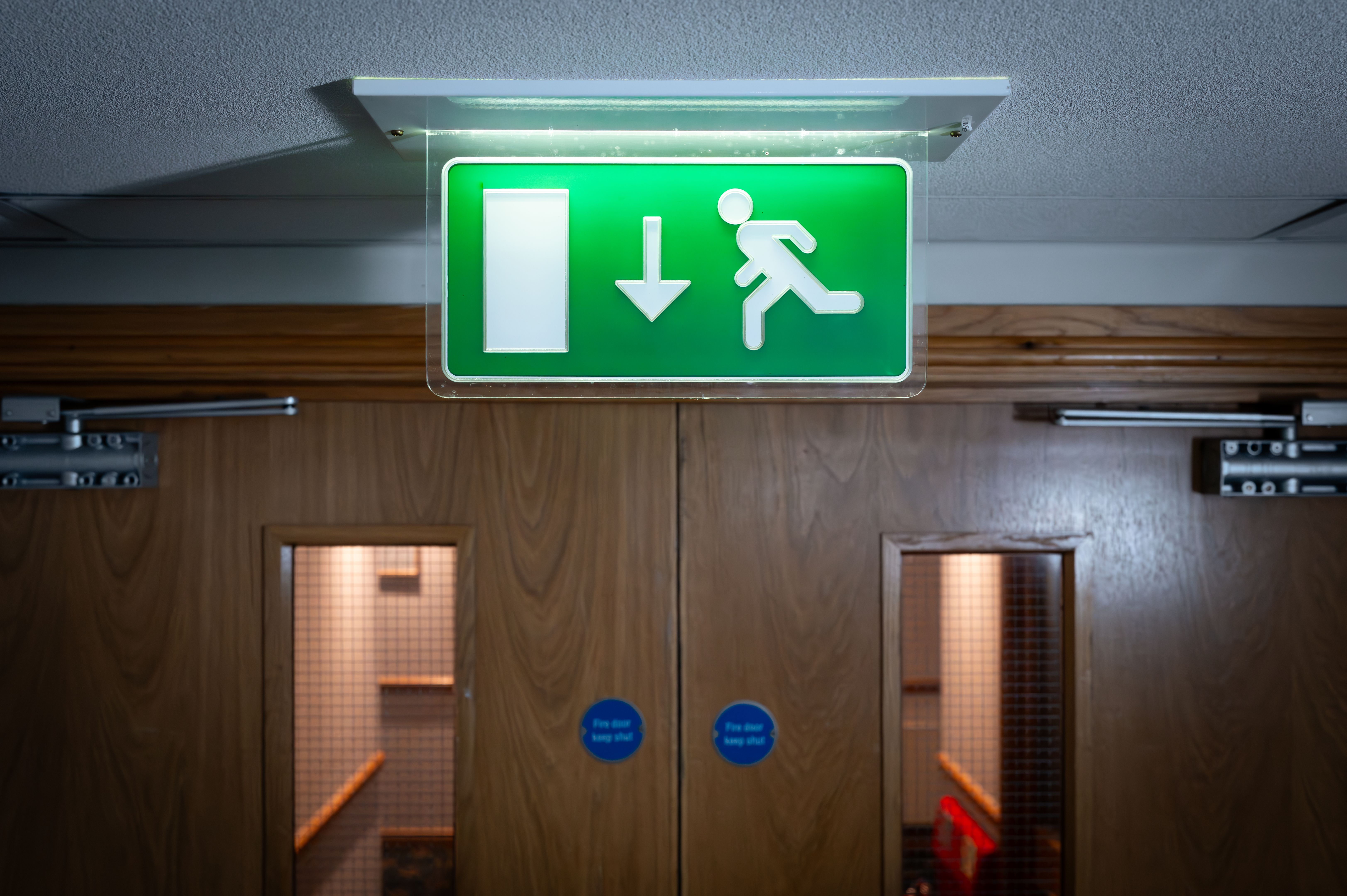
Additionally, proper signage must be installed to guide occupants to fire escapes quickly and efficiently. Signs should be visible, illuminated, and clearly indicate the direction of the fire escape route.
Penalties for Non-Compliance in New Jersey
When a fire escape is not inspected, certified, or maintained as required, building owners can face municipal fire-code violations, monetary fines, and orders to correct the deficiencies within a set timeframe. Unresolved violations can escalate to occupancy issues and can affect insurance coverage. Beyond the legal exposure, a neglected fire escape is a life-safety risk: the structure exists precisely for the moment when every other exit is blocked. Staying ahead of the five-year certification cycle is far less costly than responding to a violation or an incident.
Who Is Responsible for Fire Escape Compliance?
In New Jersey, the building owner and property manager are responsible for keeping fire escapes safe, accessible, and compliant. That includes arranging the five-year DCA certification through a licensed professional, addressing any deficiencies found, and keeping records of inspections and repairs. For multifamily and commercial properties, staying compliant also protects tenants, occupancy permits, and insurance standing. A professional fire escape inspection from a certified provider is the simplest way to confirm your building meets current code.
Legal Consequences of Non-Compliance
Failing to comply with New Jersey's fire escape regulations can have serious legal consequences. Building owners may face fines, legal action, or other penalties if their fire escapes do not meet the required standards. More importantly, non-compliance puts lives at risk in the event of a fire.
To avoid these risks, building owners should stay informed about current regulations and seek professional guidance when necessary. This proactive approach helps ensure that all safety measures are in place and that the property remains compliant with legal requirements.
Frequently Asked Questions
Are fire escapes legally required in New Jersey?
Fire escapes are required where they serve as a code-recognized means of egress under the New Jersey Uniform Construction Code and Uniform Fire Code. Where they exist, they must be maintained, inspected, and certified to stay compliant and occupiable.
How often must fire escapes be certified in NJ?
Every five years, a licensed engineer or qualified professional must inspect, test where required, and certify the fire escape, filing the affidavit with the DCA. Owners should also do routine visual checks between cycles.
What codes govern fire escapes in New Jersey?
The New Jersey Uniform Construction Code sets design and installation standards, and the Uniform Fire Code (N.J.A.C. 5:70) governs ongoing maintenance, inspection, and certification.
What are the penalties for a non-compliant fire escape?
Owners can face fire-code violations, fines, and correction orders, and unresolved issues can affect occupancy and insurance. Correcting deficiencies promptly and keeping certification current avoids these outcomes.
Who can certify a fire escape in New Jersey?
Only a licensed professional engineer, architect, or qualified design professional can issue a valid fire escape certification for DCA compliance.